Quick Answer
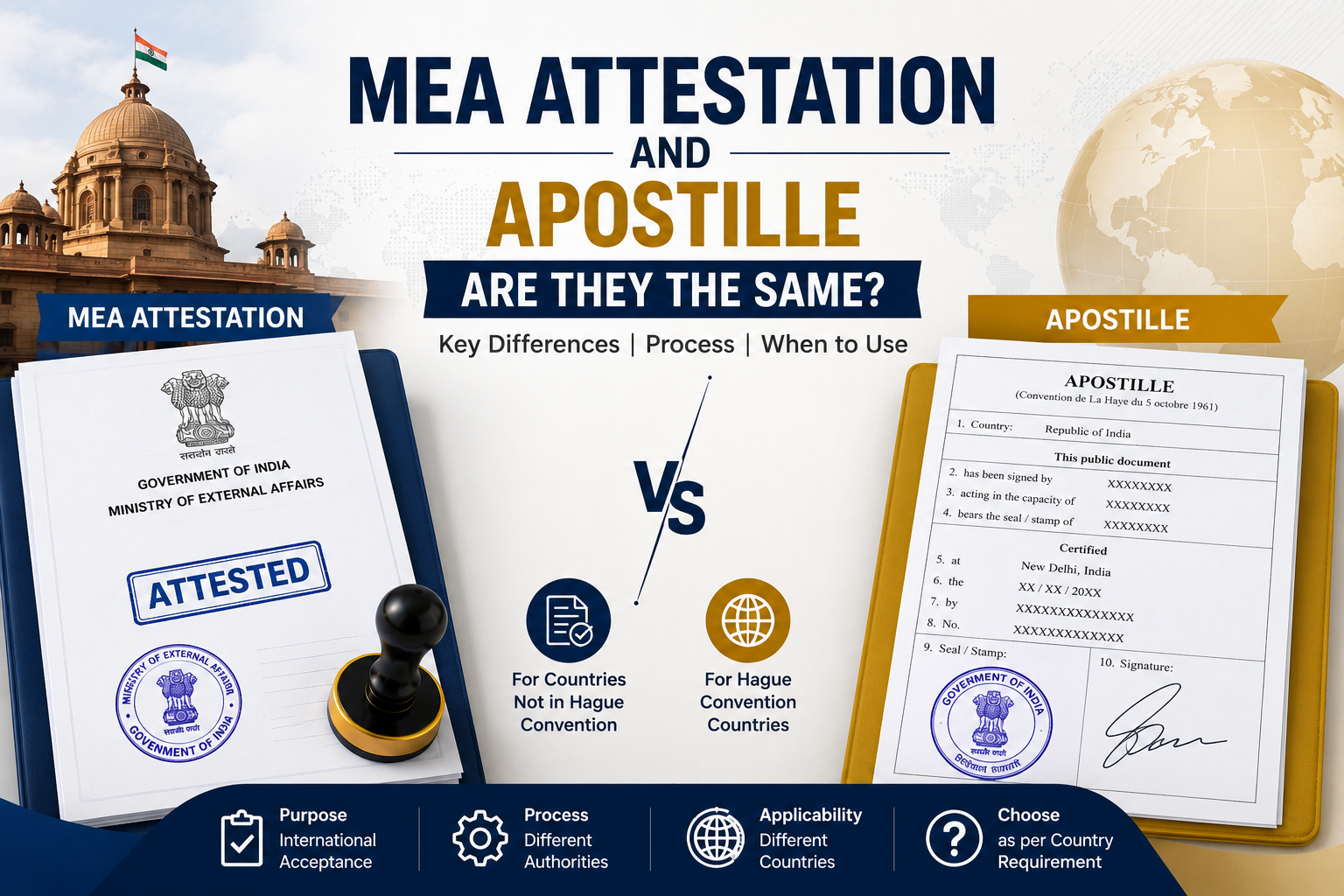
No, MEA attestation and apostille are not the same. Apostille is a type of MEA authentication used for Hague Convention member countries, while normal MEA attestation is used for countries where apostille is not accepted or where Embassy legalisation is required.
MEA attestation and apostille are related to document authentication, but they are not the same. Both are handled through the Ministry of External Affairs for documents that need to be used outside India, but the purpose, destination country, format, and acceptance are different.
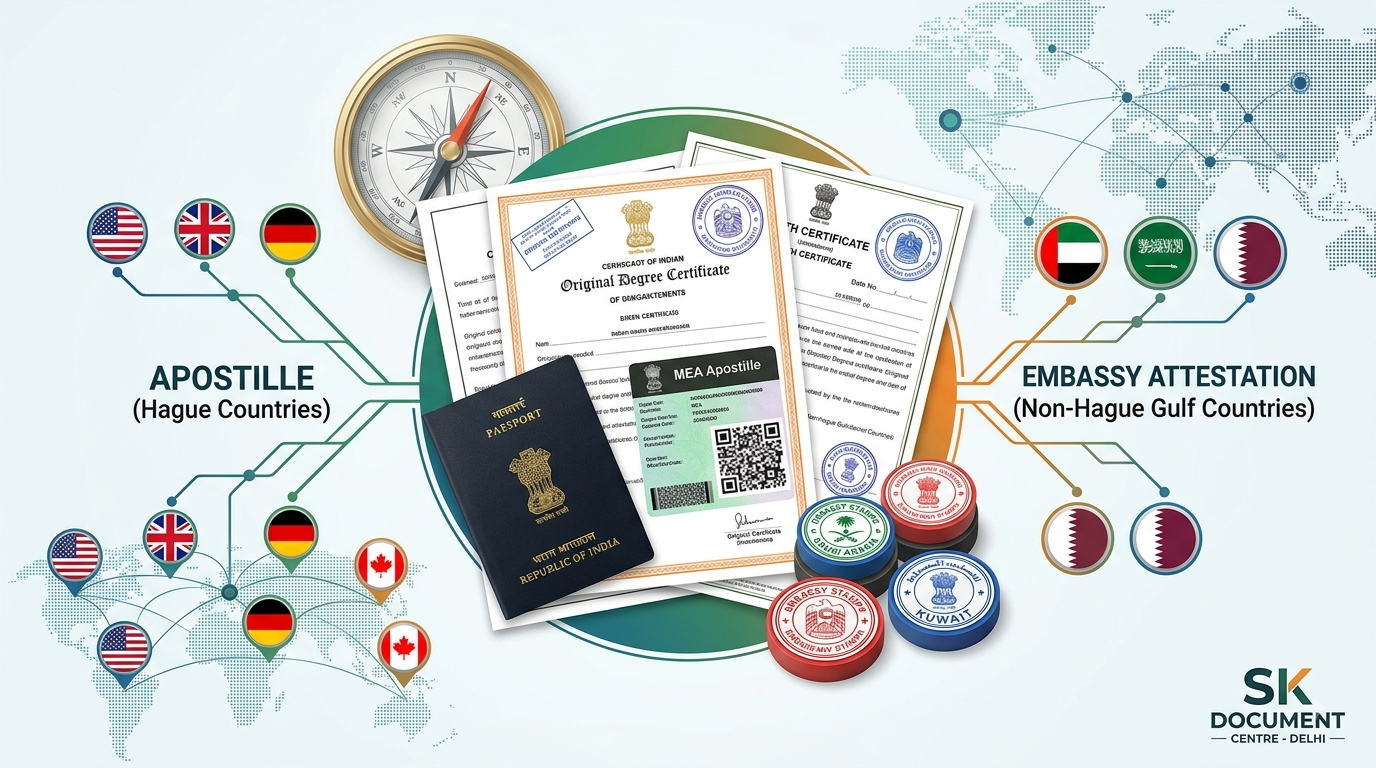
Apostille is used for countries that are members of the Hague Apostille Convention. Normal MEA attestation is used for countries where apostille is not accepted and where Embassy or Consulate attestation may be required after MEA authentication.
This blog explains the difference between MEA attestation and apostille, when each is required, which documents can be processed, and how applicants can choose the correct route before submission.
What Is MEA Attestation?
MEA attestation is document authentication done by the Ministry of External Affairs for Indian documents that need to be used abroad. It confirms that the document has been verified by the correct Indian authority before foreign use.
MEA attestation is generally required after first-level verification by the relevant authority. This first-level verification may be done by Notary, SDM, Home Department, HRD, University, Board, or Chamber of Commerce depending on the document type.
MEA attestation may be required for countries where Embassy or Consulate legalisation is needed after Indian-side authentication.
For India-side service details, readers can visit MEA Attestation.
What Is Apostille?
Apostille is a simplified form of document authentication used between countries that are members of the Hague Apostille Convention. If the destination country accepts apostille, the document may not need further Embassy legalisation in many cases.
Apostille is usually used for personal and educational documents such as birth certificates, marriage certificates, affidavits, power of attorney, degree certificates, diploma certificates, matriculation certificates, and secondary level certificates.
For apostille-related service details, readers can visit Apostille Services.
MEA Attestation vs Apostille: Main Difference
The main difference between MEA attestation and apostille is the destination country requirement. Apostille is used for Hague Convention member countries, while normal MEA attestation is used for countries where apostille is not accepted or where Embassy attestation is required.
| Point | MEA Attestation | Apostille |
|---|---|---|
| Purpose | Authentication for countries where apostille is not accepted | Authentication for Hague Convention member countries |
| Issued By | Ministry of External Affairs | Ministry of External Affairs |
| Embassy Attestation | May be required after MEA attestation | Usually not required if apostille is accepted |
| Common Use | Non-Hague countries or Embassy legalisation route | Hague Convention countries |
| Format | MEA stamp or attestation | Apostille sticker or certificate |
| Document Type | Educational, personal and commercial documents | Mainly personal and educational documents, depending on requirement |
Are Both Done by MEA?
Yes, both normal attestation and apostille are handled through the Ministry of External Affairs process. However, they are not used for the same destination or purpose.
Apostille is not completely separate from MEA. It is one type of MEA authentication, but it is different from normal MEA attestation.
The final requirement depends on the destination country, document type, and receiving authority.
When Is MEA Attestation Required?
MEA attestation may be required when the destination country does not accept apostille or when Embassy attestation is part of the legalisation chain.
- Employment abroad
- Family visa
- Dependent visa
- Residence permit
- Higher education
- Business setup
- Company documentation
- Legal use abroad
- Commercial submission
- Embassy attestation process
After MEA attestation, some countries may require Embassy or Consulate attestation. This depends on the destination country and the receiving authority.
When Is Apostille Required?
Apostille is required when the document needs to be used in a Hague Convention member country and the receiving authority accepts apostille.
- Higher education abroad
- Employment documentation
- Marriage registration
- Birth certificate use
- Legal declaration
- Affidavit use
- Power of attorney
- Academic admission
- Personal documentation
For Hague member countries, apostille generally removes the need for further Embassy legalisation, but applicants should still confirm the receiving authority’s requirement.
Which Countries Need Apostille and Which Need Attestation?
The requirement depends on whether the destination country is a member of the Hague Apostille Convention and whether the receiving authority accepts apostille.
Hague Convention Country
Apostille may be required if the country accepts apostille for the document type and purpose.
Non-Hague Country
Normal MEA attestation and Embassy or Consulate attestation may be required.
Authority-Specific Rule
Some organisations may ask for a specific format, so applicants should confirm before submission.
Documents That May Need MEA Attestation or Apostille
The document category affects the first-level verification route before MEA attestation or apostille.
Educational Documents
Degree certificate, diploma certificate, marksheet, school certificate, matriculation certificate, secondary certificate, transcript, and technical certificate.
Personal Documents
Birth certificate, marriage certificate, death certificate, affidavit, power of attorney, police clearance certificate, medical certificate, and divorce certificate.
Commercial Documents
Commercial invoice, certificate of origin, company registration certificate, board resolution, memorandum of association, article of association, business agreement, and commercial power of attorney.
For marriage certificate-related information, readers can visit Marriage Certificate Attestation.
Step-by-Step Process
The process may differ depending on document type and destination country, but the basic sequence is usually similar.
Check Destination Country Requirement
Confirm whether the destination country needs apostille, normal MEA attestation, Embassy attestation, or another country-specific process.
Identify Document Category
Check whether the document is educational, personal, or commercial because first-level verification differs by category.
Complete First-Level Verification
Complete Notary, SDM, Home Department, HRD, University, Board, or Chamber verification depending on document type.
Submit for MEA Authentication
After first-level verification, the document is submitted through the authorised route for MEA attestation or apostille.
Complete Embassy Attestation, If Required
If the destination country requires Embassy legalisation after MEA attestation, complete Embassy or Consulate attestation.
For Delhi-based personal document authentication, readers can check SDM Attestation in Delhi.
Fees for MEA Attestation and Apostille
Fees may depend on whether the document needs apostille or normal attestation, outsourced agency service charges, scanning charges, courier, document type, urgency, and service-provider handling.
| Fee Factor | Why It Matters |
|---|---|
| Authentication Type | Apostille and normal MEA attestation may have different official and service-related charges |
| Document Type | Educational, personal, and commercial documents may follow different routes |
| Verification Route | Notary, SDM, HRD, Home Department, University, or Chamber verification may affect cost |
| Courier or Delivery | Pickup, delivery, or courier requirements may add charges |
| Urgency | Urgent handling, if available, may affect the total cost |
Applicants should confirm the latest fee details before submission because service-provider, courier, delivery, or additional verification charges may apply.
Common Mistakes to Avoid
Applicants should avoid these mistakes:
- Assuming MEA attestation and apostille are the same
- Applying for apostille for a country that needs Embassy attestation
- Applying for Embassy attestation when apostille is enough
- Not checking Hague Convention status
- Starting without confirming receiving authority requirement
- Submitting damaged or unclear documents
- Ignoring name mismatch
- Missing passport copy
- Missing authorisation letter
- Choosing the wrong first-level verification route
- Assuming photocopies can be legalised without checking rules
Check the Correct Authentication Route
Before applying, applicants should confirm whether the destination country needs apostille, normal MEA attestation, Embassy attestation, or another country-specific legalisation route.
View Document Attestation ServicesFrequently Asked Questions
Is MEA attestation and apostille the same?
No. Apostille is a type of MEA authentication used for Hague Convention member countries. Normal MEA attestation is used for countries where apostille is not accepted or where Embassy legalisation is required.
Who issues apostille in India?
Apostille in India is issued through the Ministry of External Affairs process after the required document verification.
Is Embassy attestation required after apostille?
For Hague Convention member countries where apostille is accepted, Embassy attestation is usually not required. Applicants should confirm with the receiving authority before submission.
Is MEA attestation required before apostille?
Apostille itself is issued through the MEA authentication process after required first-level verification. It is not the same as normal MEA attestation followed by Embassy attestation.
Which documents can be apostilled?
Personal and educational documents such as birth certificates, marriage certificates, affidavits, power of attorney, degree certificates, diplomas, matriculation certificates, and secondary certificates may be apostilled depending on requirement.
Which documents need normal MEA attestation?
Documents meant for countries where apostille is not accepted may need normal MEA attestation. Commercial documents may also follow country-specific attestation and Embassy legalisation routes.
How do I know whether I need apostille or MEA attestation?
Check the destination country and the receiving authority’s requirement. Hague Convention countries may accept apostille, while non-Hague countries may require MEA attestation and Embassy attestation.
Does MEA accept documents directly from individuals?
MEA documents are generally submitted through authorised or outsourced service channels, not directly by individual applicants at MEA counters.
Related Document Services
Final Thoughts
MEA attestation and apostille are connected but not the same. Apostille is used for Hague Convention member countries, while normal MEA attestation is used for countries where apostille is not accepted or where Embassy legalisation is required.
Before applying, applicants should check the destination country, receiving authority requirement, document category, first-level verification route, fees, timeline, and whether Embassy attestation is needed after MEA. Choosing the correct route from the beginning helps avoid delay, rejection, and repeated processing.