If you’re planning to study abroad, apply for a job overseas, or even start a new life in another country, there’s one small word that quietly becomes very important apostille.
Now the problem is, most people hear about it from someone else, maybe a friend or a consultant, and end up more confused than informed. It sounds technical, it feels like a government-heavy process, and no one really explains it in a way that actually makes sense.
So let’s fix that.
What is an Apostille—Really?
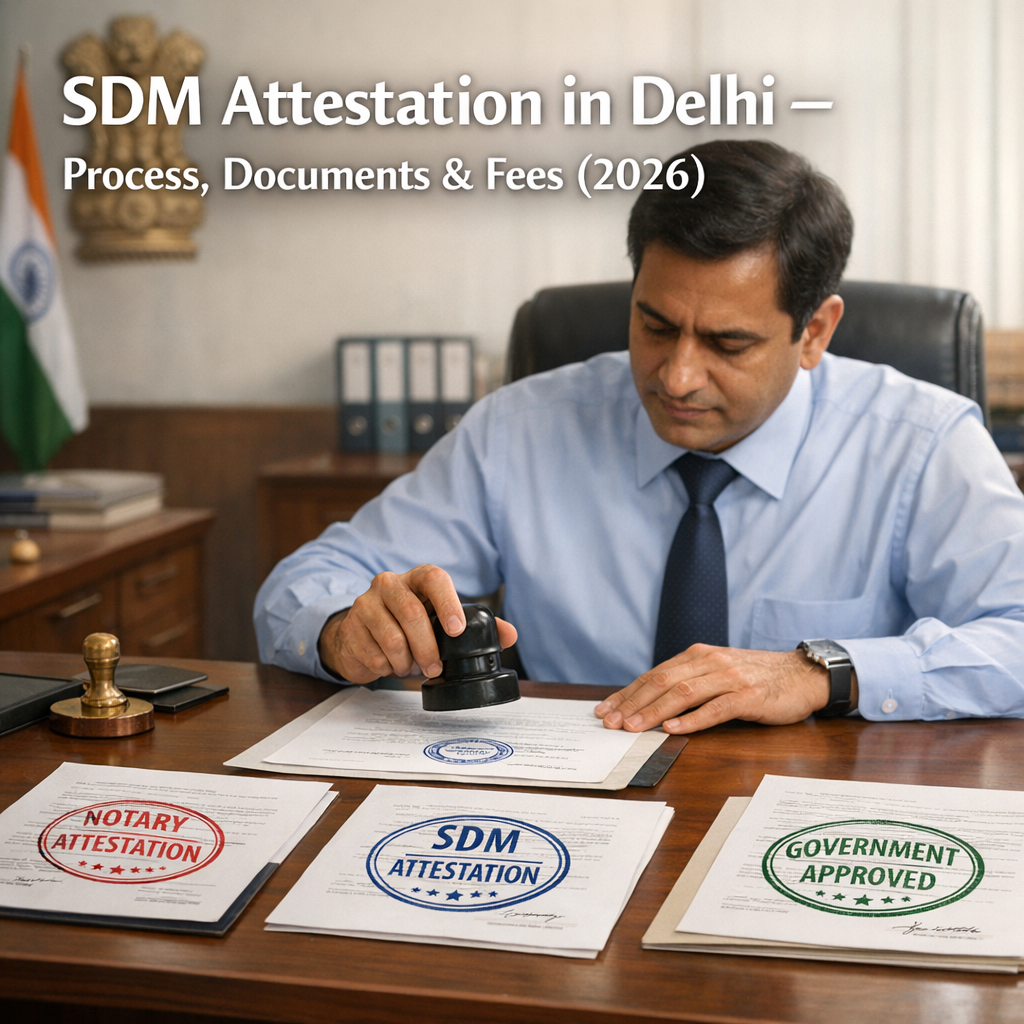
At its core, an apostille is nothing more than a verification stamp issued by the Ministry of External Affairs.
But that simple definition doesn’t do justice to what it actually means for you.
Think of it like this:
When you carry your degree, birth certificate, or any official document to another country, that country has no direct way of knowing whether your document is real or not.
- They don’t know your university.
- They don’t know your state authority.
- And they definitely won’t take your word for it.
This is where apostille steps in.
It’s the Government of India saying:
“We have verified this document. It is genuine. You can trust it.”
This system exists because of the Hague Convention—an international agreement that allows countries to accept each other’s verified documents without going through endless layers of checking.
So instead of complicated verification in every country, one apostille stamp does the job.
Why Apostille Isn’t Optional (If You’re Going Abroad)
A lot of people treat apostille like just another step in the process. Something you “get done” because someone told you to.
But in reality, it plays a much bigger role.
When you submit your documents abroad—for a university, a visa office, or an employer—you’re asking them to trust your identity, your education, your background.
Without apostille, that trust is missing.
And when trust is missing:
- Applications get delayed
- Documents get rejected
- Or you’re asked to go through longer verification routes
With apostille, things move faster, smoother, and with far less friction.
It’s not just a stamp.
It’s what makes your documents acceptable globally.
How the Apostille Process Works (Without the Confusion)
Now let’s break down what actually happens behind the scenes.
Not in complicated terms—but in a way that you can clearly follow.
It Starts With Verification
Before any document reaches the central government, it needs to be verified at the source.
- If it’s an educational document—like your degree or marksheet—it goes through your state’s HRD (Human Resource Department).
- If it’s a personal document—like a birth certificate or affidavit—it’s checked by the relevant state authority.
At this stage, one simple question is being answered:
“Is this document genuine?”
Only after that answer is confirmed does your document move forward.
Then Comes the Final Step: Apostille
Once the initial verification is complete, your document is processed by the Ministry of External Affairs.
Here, the MEA does not re-verify everything from scratch. Instead, it validates the authority that already verified your document.
And then, it places the apostille.
That’s the moment your document becomes internationally valid—at least in countries that are part of the Hague Convention.
What the Apostille Actually Looks Like
If you’ve never seen one before, an apostille is usually a printed sticker or stamped label attached to your document.
It includes:
- A unique identification number
- An official seal
- And most importantly, a QR code
That QR code is what makes the system efficient.
Anyone abroad—whether it’s a university officer or an immigration official—can scan it and instantly verify that your document is authentic.
No guesswork. No delays.
What Kind of Documents Need Apostille?
By now, you might be wondering whether your documents fall into this category.
In most cases, they do—if you’re going abroad for anything official.
Educational Documents
- Degree certificates
- Mark sheets
- Academic transcripts
Personal Documents
- Birth certificates
- Marriage certificates
- Affidavits
Commercial Documents
- Company papers
- Agreements
- Incorporation documents
If a document needs to be presented outside India, there’s a strong chance it will require apostille.
The Small Details That Make a Big Difference
- Apostille is not universal. It only applies to countries that are part of the Hague Convention. For others, a different process called attestation is required.
- It is always done on original documents. Photocopies don’t qualify because the entire process is about authenticity.
- It doesn’t validate what’s written in the document. It only confirms that the document itself is genuine.
That distinction matters.
Clearing the Most Common Doubts
Is apostille mandatory?
If you’re going to a Hague Convention country—yes, in most official cases.
Is it the same as attestation?
No. Apostille is simpler and used for specific countries. Attestation is for the rest.
Does it expire?
Generally no, but some institutions may have their own validity preferences.
Can you apostille a copy?
No. Only original documents are accepted in the process.
Final Thoughts
Once you strip away the jargon and the confusion, apostille is actually a very logical system.
It exists to solve one simple problem:
How do countries trust documents issued in another country?
And the answer is this structured process of verification and certification.
So instead of thinking of apostille as just another step, it helps to see it for what it really is—
A bridge of trust between your documents and the country you’re going to.
Once that bridge is in place, everything else becomes a lot smoother.